

When Billy found CLAPA on Facebook, he said he no longer felt isolated.
“The feeling I got when I clicked on to those pages is hard to describe. It was quite special. I thought, ‘I’m not alone anymore. It’s not just me, there’s lots of us’.
“I came across the pages by chance. I started reading people’s stories, and the discussions and comments, and realised there was a big, brilliant community of us out there. It wasn’t just me.
Going through the CLAPA stories it was such a relief to know I’m not the only person to have gone through all of this.
“I was about 20 at the time and, up till then, I’d only ever seen one other person with a cleft in my area. Going through the CLAPA stories it was such a relief to know I’m not the only person to have gone through all of this. It’s more common than you think.”
Essex boy Billy was born with a unilateral cleft lip and palate in 1988.
“Growing up in the 90s with a cleft was tough. There was lots of bullying, especially from the school bully at senior school, and a lot of judgment hanging around. Right up to my mid 20s I’d still get funny looks. People didn’t understand. 
“Even now, I sometimes catch people looking. I’m quite lucky though, as I’ve grown a goatee over the scar, so it’s not as visible as if I was clean shaven.”
Billy met his wife Aisha on Facebook (“life changes on Facebook” he laughed) and they now have four “beautiful boys”, aged from 15 months to 14 years.
He said it was Aisha who got him along to CLAPA’s rebrand photo shoot.
“I don’t usually want to put myself out there because of my past, but my wife encouraged me to have my photos taken.
“A lot of it stems from when I was born, when my mum rejected me because of my cleft lip. She was like, ‘what will people say?’ I went to live with my nan, who raised me for eight years, only seeing mum and dad at weekends, before I went back to my parents’ full time. My cleft was never spoken about.
It wasn’t that long ago, but there was more stigma around then.
“When I became a parent, I couldn’t imagine how my mum did that, in any way, shape or form. Even now, I don’t understand how my dad went along with it, but I guess it was a different time. It wasn’t that long ago, but there was more stigma around then.
“I remember a couple of nice times, but there aren’t too many good memories. I lost them both in my early 20s, they died nine months apart. I’ve made my peace with it and have a wonderful family now, with a beautiful wife and loving kids.”
Billy said he remembers a constant “steam train” of appointments for his cleft care growing up, including a failed bone graft surgery to close his cleft palate.
“They were using a new, American technique but it all came away. I think the stitches were meant to last a bit longer than they did. I remember eating soup, and chunks of bones falling out.
“They said I could go for it again, but I never did. I’ve got the scar from the first one, I’m alright thanks. They said I could have my scars evened up too but I didn’t go back. I had my last check up, for speech and stuff, at around 18, and then I was done. I’d had enough by then.”
My hearing’s still not so good. My wife says I mumble a lot, often when I’m tired.
Billy’s cleft palate caused problems with his hearing and speech while growing up, and he needed a number of grommet operations.
“My hearing’s still not so good, and my wife says I mumble a lot, often when I’m tired.
“I started mumbling as a kid, especially in classrooms, because I didn’t want the teachers to ask me anything. With a cleft, you don’t want any attention on you whatsoever, so if you made it hard work for them you sort of got left alone.”
Despite initial reservations, and having to be persuaded by wife Aisha, Billy said he got into the rebrand photo shoot and enjoyed meeting up with members of the CLAPA community. He said he’s planning on getting more involved.
“The photo shoot brought me out of myself a bit. I’m so glad my wife talked me into it.
“It was amazing to see the people involved in CLAPA, putting the time in, and making everyone aware of what cleft is all about. It means a lot.”
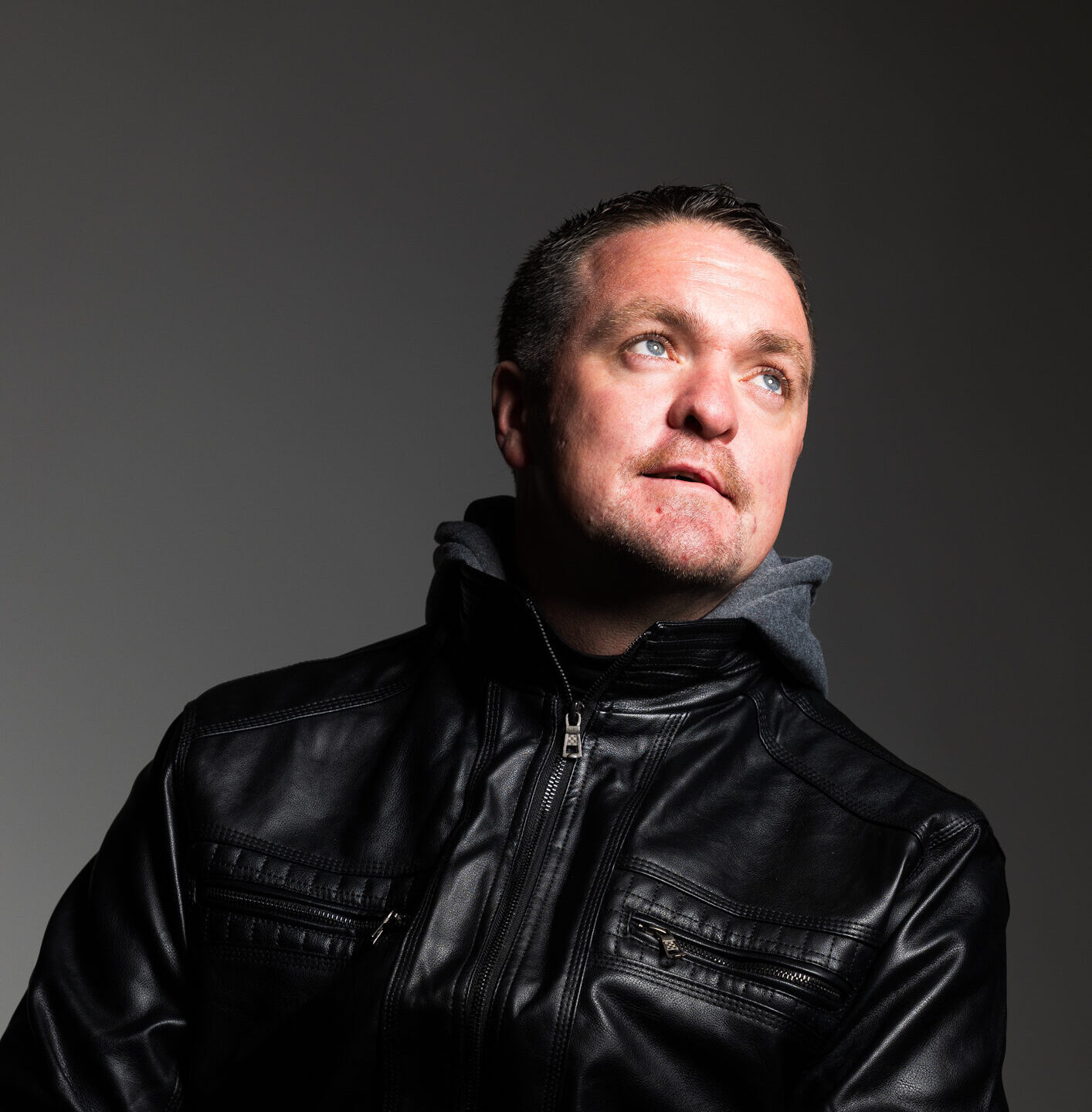
Going through the CLAPA stories it was such a relief to know I'm not the only person to have gone through all of this. It's more common than you think.