




This page is aimed at people in the UK cleft community. Click here for resources and information for cleft researchers and NHS clinicians.
CLAPA works with cleft researchers and NHS clinicians to ensure that people from the cleft community can get involved with their projects. This might include:
- Completing surveys about your experiences
- Having researchers interview you about your experiences
- Giving feedback on how research is designed or carried out
- Reviewing information materials (like leaflets) or webpages
New projects and opportunities are being added all the time – check out the latest opportunities below!
It’s important that the results of these research projects reflect the entire UK cleft community. Many research projects are underrepresented by people from ethnic minorities, men, people of colour, and people who follow religions other than Christianity. If you represent any of these groups, we strongly encourage you to get involved so that your voice is heard.
If you have any questions or feedback, please contact Gillian, our Involvement Manager, at [email protected]
Why get involved with research?
Getting involved in research is an investment in the future of healthcare. Current treatments only exist because people like you have supported research in the past, and what you do today can help pave the way for even better treatment to be available to others in the future.
Many people who take part in or give feedback on studies say it helps give them a sense of control over whatever treatment they or their child are going through and makes them feel more connected to a community of people affected by a condition.
[I have really enjoyed] being able to influence research programmes and seeing how my input makes a difference with cleft treatment.CLAPA Patient Rep
Latest opportunities to get involved

Research Opportunity: Oral Health in children born with PRS (Pierre Robin Sequence)
Researchers at the University of Sheffield are looking for parents of children who were born with PRS (Pierre Robin Sequence) to take part in a study advisory group on oral health.
Research Opportunity: School outcomes for children born with a cleft
Researchers at Newcastle University are looking to speak to people with lived experience of cleft palate (born with or without cleft lip) to explore why children born with a cleft have poorer school outcomes than other children of the same age.
Research Opportunity: Cleft Genetics Survey
Doctors and scientists based at Great Ormond Street Hospital, University College London and the Wellcome Sanger Institute near Cambridge are planning research into new genetic causes of cleft.
Research Opportunity: Surgical Decision Making
Researchers at the University of Oxford are looking who have been involved in clinical discussions about head and/or face surgery on children for aesthetic reasons, either as the child, the parent/carer or the health care professional.
Research Opportunity: The Lived Experience of Autistic Adults with Cleft Lip and Palate
Researchers at the University of Lancashire are looking for participants to take part in a research project looking at the experiences of autistic adults born with a cleft.
Join the CLAPA Young Adults Group (YAG)
Do you want to use your voice to help shape, support, and guide CLAPA to deliver the right services for adults born with a cleft in the UK? Join CLAPA’s online Young Adults Group (ages 18-25) to meet other adults and discuss topics like gaps in services, recent experiences, ideas for improving services, and much more.
Ongoing research projects
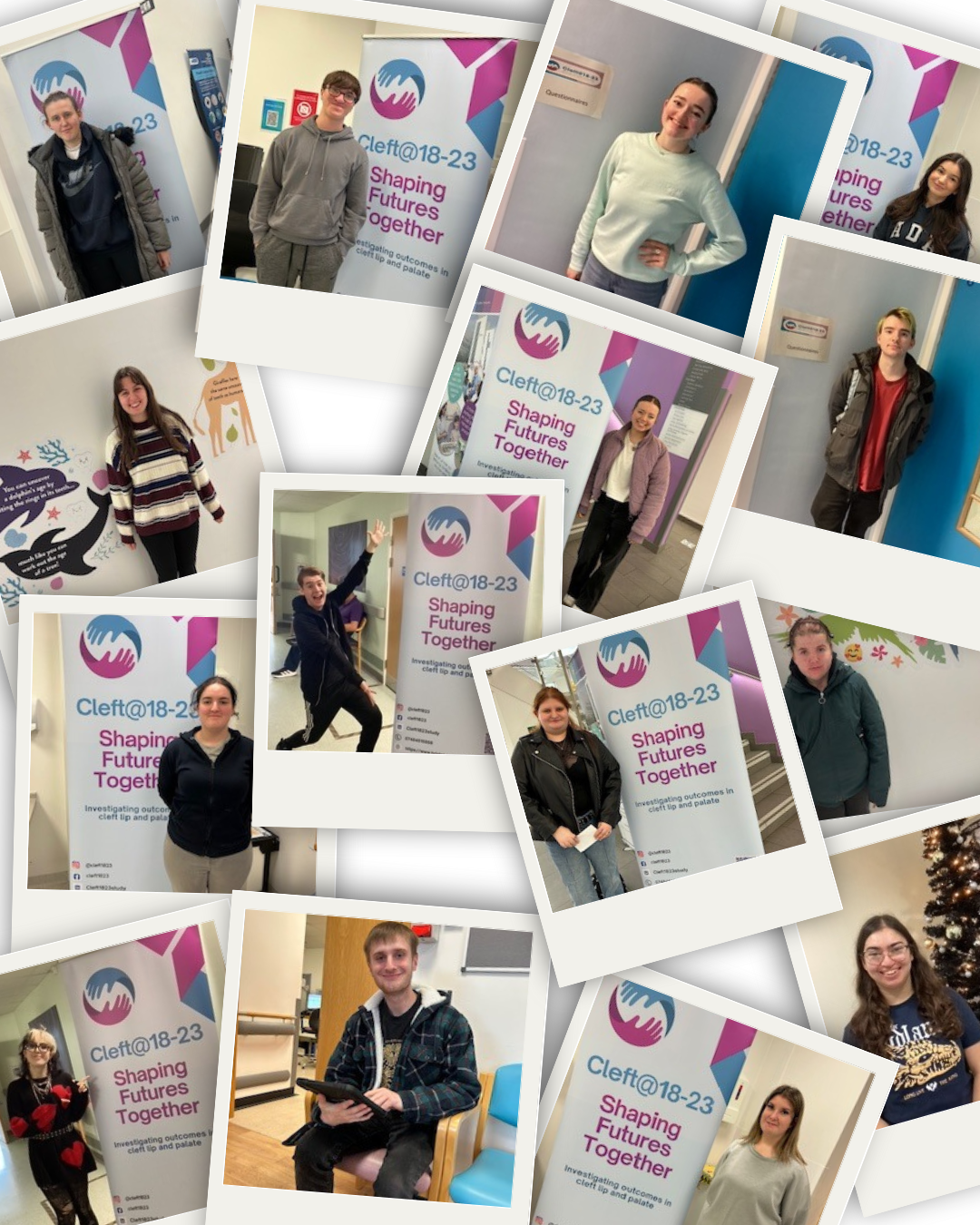
Cleft@18-23
Cleft@18-23 is an NIHR-funded research programme which investigates outcomes at the end of routine care for 18–23-year-olds born with a cleft of the lip or palate or both.
The Cleft Collective
The Cleft Collective is a UK-wide cohort study investigating the causes of cleft, the best treatments for cleft and the long-term wellbeing of those affected by cleft.
The CRANE Database
The CRANE database records information about children born with cleft lip and cleft palate in the UK. It is the best place to go for up to date statistics on the UK cleft community.

Want to reach the UK cleft community?
Are you a cleft researcher or NHS clinician with a project you'd like CLAPA's support with? Check out our 'Resources for researchers' page for information on our consultancy service.