
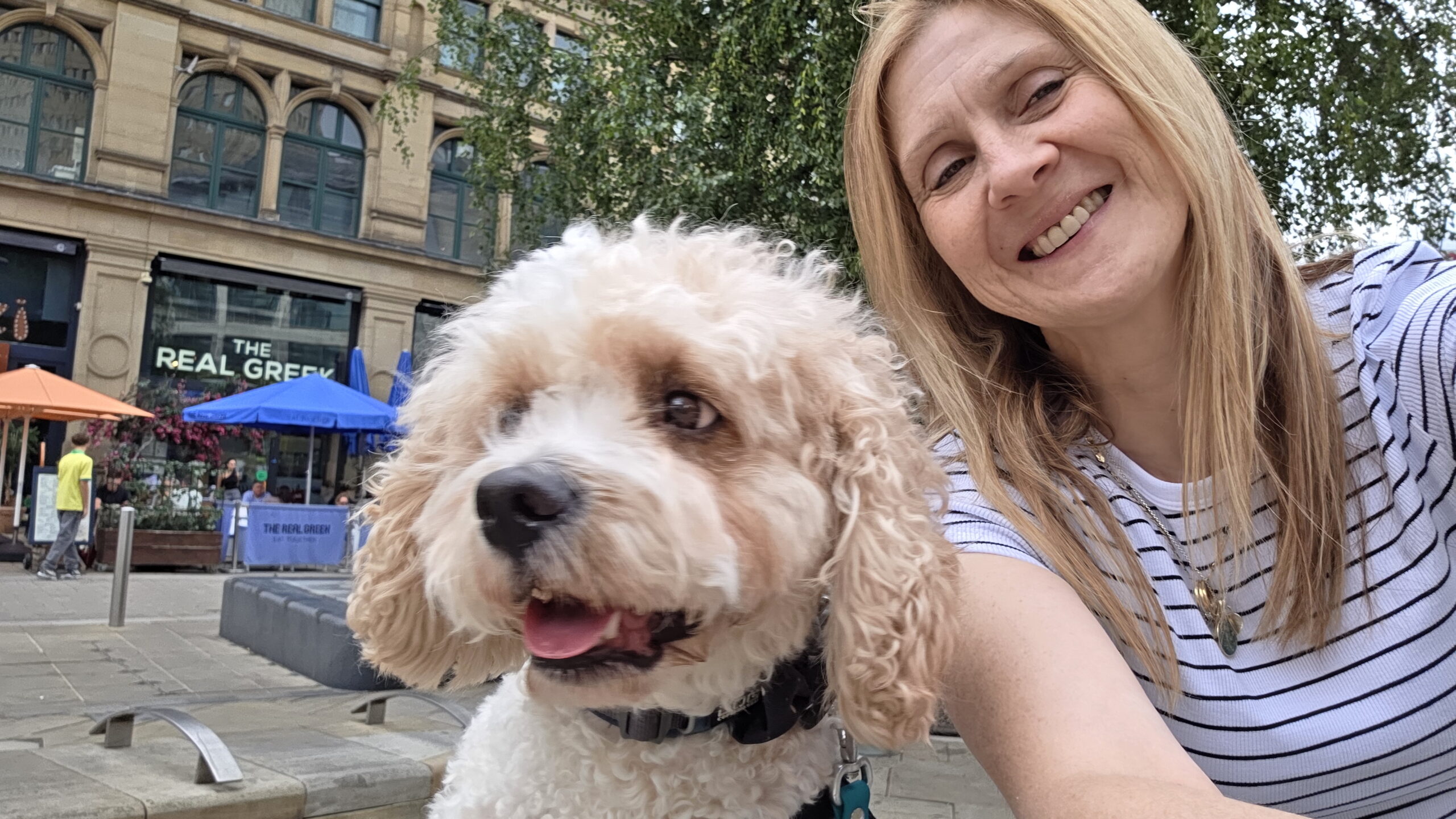
Fiona’s story is part of CLAPA’s ‘End the Cleft Dental Crisis Campaign’. For more information, click here.
Fiona has been desperately seeking an NHS dentist for more than two years, since she was kicked off her dental surgery’s list for missing an appointment.
“I forgot to attend an appointment two days after my dad died, and they threw me out. I’d had to reschedule a couple of appointments prior to that but had always given plenty of notice.
“It was a policy to get people out of the NHS clinics. I was halfway through some crown treatment at the time and it’s been left half done.
Any excuse whatsoever, especially with people like me who take up more time or resources – they just wanted us off NHS treatment lists.
“Any excuse whatsoever, especially with people like me who take up more time or resources – they just wanted us off NHS treatment lists.”
Fiona was born with Pierre Robin Syndrome in the 1970s, resulting in a small lower jaw (micrognathia), displaced tongue and cleft palate.
“It’s very rare – around one in 8,500 to 14,000 world-wide, and the stats in my day weren’t great for survival at birth.”
Fiona was treated at Liverpool’s Alder Hey Children’s Hospital, spending a substantial amount of time face down in a ‘cradle’.
“That sounds sweet, but it was a wooden contraption with sandbags holding me face down so I could breathe, and a little mirror at the bottom for me to see people. I spent most of my first two years like that, while I had surgeries to repair my cleft.”
Fiona has complex PTSD, including terrifying flashbacks, from her hospital trauma as an infant and childhood surgery. Clinical environments, including the dentist’s chair, continue to exacerbate her extreme anxiety.
But when they look in my mouth, I usually get the wide-eyed look of horror and sharp intake of breath. And then they say, ‘you’re a complicated case’.
Growing up, her dentist was a family friend who was very understanding of her condition.
“Since he retired, I’ve had some good dentists but when they move on it’s been increasingly hard finding another. I always call first to check if they are cleft aware and willing to find out about Pierre Robin Syndrome.
“But when they look in my mouth, I usually get the wide-eyed look of horror and sharp intake of breath. And then they say, ‘you’re a complicated case’.
“I’ve got a lot of titanium and various other bits going on in my mouth. There’s a bit of a Meccano arrangement in there. But my teeth are just teeth, and they need regular care.”
Fiona qualifies for free NHS dental treatment but can’t find any spaces in her area.
“And a private dentist is just unaffordable. There are monthly dental plans but you have to pay for treatment up front, and the Pierre Robin complications put me in a much higher expensive band.
It’s previous government policy and cutbacks, and managers running clinics as businesses that’s to blame.
“It’s not the individual practitioners’ faults. There are some fabulous people out there wanting to help. It’s previous government policy and cutbacks, and managers running clinics as businesses that’s to blame.”
Fiona is an active member of CLAPA’s dental campaign policy group; adult focus group; and cleft development patient engagement group. She advocates for better dental treatment for people born with a cleft.
“If you have a condition that affects anything other than your teeth you’re in a hospital, you’re dealt with, not left stranded. If there was a problem with my feet I’d be seen under the NHS no problem, so what’s the difference with teeth?
If there was a problem with my feet I’d be seen under the NHS no problem, so what’s the difference with teeth?
“There was this huge move towards privatising dentistry, and the consequences have been horrific. It’s a ridiculous situation for everyone, and especially for those with anything else going on in their mouth.
“If I had something complicated with anywhere else on my body, I’d be on some sort of priority system, and have more access to treatment, but with teeth it’s totally different and that’s wrong.
“I think we’ve all been trained to think dentistry is cosmetic in some way. It’s not an accessory when you’re born with a cleft – we’re dealing with health and the ability to eat and speak, not fashion accessories here.”