
NHS information on dental health
The NHS website has lots of helpful information on dental health in children.

This page goes through common dental health concerns for children born with a cleft and what you can do to help your child grow up with healthy teeth and gums.
Children with a cleft which affects their palate or gums are more at risk of dental health issues like tooth decay, as the shape and position of their teeth may make them more difficult to keep clean.
This page goes through common dental health concerns for children born with a cleft and what you can do to help your child grow up with healthy teeth and gums.
A cleft which affects the gums often means children have missing, extra or misshapen teeth around this area. This can make it harder to keep the teeth clean.
From a dentist’s point of view, children born with a cleft often have ‘narrow crowded arches’, and accessing the mouth and teeth for treatment can be more difficult.
There is evidence that the major increase in tooth decay (sometimes called caries) in young children happens between the ages of 3.5 and 4.5 years, and in most cases this is entirely preventable.
Helping your child to form and maintain good dental health habits early on can have a positive knock-on effect for the rest of their lives.
Good dental health and hygiene is important for everyone. It can impact on speech, eating, self-esteem, overall health and more. Helping your child to develop good habits early on is a great way to set them up for success as an adult.
Strong teeth and gums are especially important for children born with a cleft, because it will give any cleft treatment a better chance of success.
Children born with a cleft are more likely to need orthodontic work (like braces) and/or operations on their mouth as they grow up. If they can grow up without much tooth decay, free of pain, and without needing fillings or extractions (tooth removal), this will help to keep their teeth, gums and the jawbone strong. This will make treatment easier and more successful, and it will also make dentist visits more pleasant, which can encourage better dental health as an adult.
If a child has poor dental health, especially if one or more teeth have been lost to tooth decay, they may not be able to have certain treatments to help with issues caused by their cleft.
The dental specialist with your cleft team will be able to give specialist assessment and advice to do with how your child’s cleft may affect their teeth and overall dental health. It’s likely that they will meet with you in your child’s first year of life. This is to help identify children with a higher risk of tooth decay, but also to make sure you’re well-equipped to care for your child’s teeth.
For general check-ups and treatment, you should make regular appointments with your family dentist, or General Dental Practitioner. They should be made aware of any problems caused by your child’s cleft and what this may mean for their treatment.
In some cases where more specialist treatment is necessary, you may have to go back to your Cleft Team.
It’s important for your child to have regular dental check-ups with a General Dental Practitioner (family dentist). If you’re having trouble accessing local dental care because of long waiting lists or because of issues to do with your child’s cleft, you may find it helpful to write to them to explain how vital good dental health is for people born with a cleft.
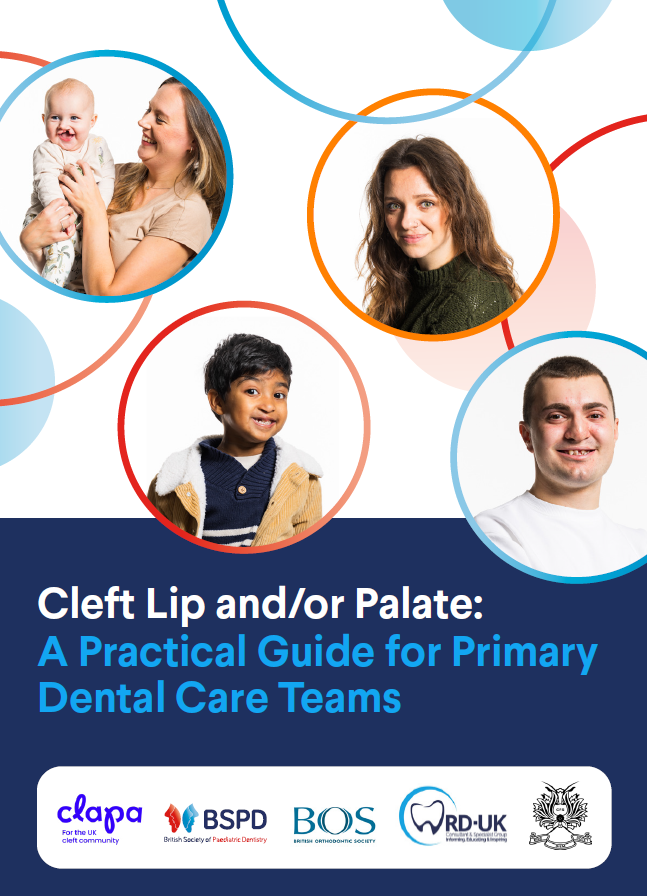
This guide was developed to help dentists understand how to treat and support patients born with a cleft in the United Kingdom. You may wish to share it with your family dentist, or direct them to our 'Resources for dentists' page.

Try to make visits to the dentist fun and rewarding. If your child has had to spend lots of time in hospital or in clinics, they may see the dentist as an extension of this and be reluctant to go.
You should start brushing your child’s teeth twice a day as soon as their first milk tooth comes through, and you should continue to help them every time they brush as most children won’t be able to brush their teeth effectively until they are nine or ten.
Fluoride helps prevent tooth decay, so toothpaste needs to have enough fluoride in it (around 1,350-1,500 parts per million (ppm) fluoride) to be effective. A lot of children’s toothpaste doesn’t have enough, so you may want to ask your dentist whether you should be using adult toothpaste on your child.

Some children will need extra fluoride to help prevent tooth decay. This may be in the form of a chewable tablet, or, for older children, a mouth rinse. Your dentist might recommend fluoride varnish, which is painted onto the surface of the tooth every six months to prevent decay. This works by strengthening tooth enamel so it is more resistant to decay.
The less time the teeth spend ‘under attack’ by bacteria the better, so try to stick to only three meals a day and avoid snacking between meals. If they need snacks, stick to foods that don't contain much sugar.
Watch out for ‘hidden’ sugars in foods like tomato sauce, savoury biscuits and even dried fruit. Sipping on a drink throughout the day (unless it is water) can cause tooth decay. Milk is a good thing for children to drink, but it does contain a natural sugar, and if it is regularly drunk at night time it can cause tooth decay.
Chewing gum can help as it stimulates saliva flow which clears away damaging acids more quickly, but it must be sugar free gum, it must be started immediately after eating, and it must be chewed for around 15-20 minutes to be effective.
Around the area of the cleft there may be teeth that have not formed all their enamel properly, or are at more awkward angles to reach with a toothbrush. These teeth may collect more plaque on their rougher surface. If the lip is tight because of a cleft lip repair, it can be harder to move it away from the teeth so they can be cleaned properly. Your dentist can show you how to clean this area, which may involve using a special little brush.
Wearing a custom-made mouth guard during sports will reduce the likelihood of your child’s teeth being damaged.
What kind of orthodontic treatment your child will need depends largely on whether or not their cleft affects the alveolus, which is the socket in the jawbone where the teeth are set.
Children born with a cleft that goes through the gum and affects their teeth will usually need more extensive orthodontic treatment. This normally includes an Alveolar Bone Graft (ABG) operation between the ages of 8-12.
This operation aims to fill the gap in the gum before the child’s adult teeth come through. To prepare for this surgery, an orthodontist may need to widen the area around the cleft to allow the surgeon to access it easier, and this can involve your child wearing braces for a while before the operation.
After the majority of permanent adult teeth have come through in early adolescence, the orthodontist will look at any issues such as missing, irregular or discoloured teeth and work closely with the dentists and surgeons in the Cleft Team to see what can be done about any issues. Treatment for these will depend on the child’s individual needs, and might include braces, crowns, and even an operation to realign the jaws (orthognathic surgery) in their late teens.
If your child will need this kind of treatment, you should be in regular contact with an orthodontist who can best advise you on how to support your child at this time.
CLAPA has collected tips and advice for children and young people to help them look after their braces.
The NHS website has lots of helpful information on dental health in children.
The Oral Health Foundation is a charity dedicated to improving oral health and wellbeing by providing impartial advice on all aspects of oral health directly to those who need it most.