

For babies born with a cleft who may not be able to use standard bottles and teats, CLAPA supplies several options which have been recommended by NHS Cleft Nurse Specialists.
You should speak to your Cleft Nurse Specialist before buying or using any feeding equipment to ensure you get the right items and that you know how to use them safely and effectively. Failure to follow appropriate guidance could result in serious risk of harm to your baby.
CLAPA’s staff are not medically trained and cannot give advice on what equipment would be best for your baby or how to use these items safely.
Babies using bottles and teats from CLAPA


Request a free 'Welcome Pack'
CLAPA provides a free ‘Welcome Pack’ of bottles, teats and information for families with new babies born with a cleft in the UK. You should only request a Welcome Pack after your baby has been born and your Cleft Nurse Specialist has told you what you need.
MAM Soft Bottles and Orthodontic Teats
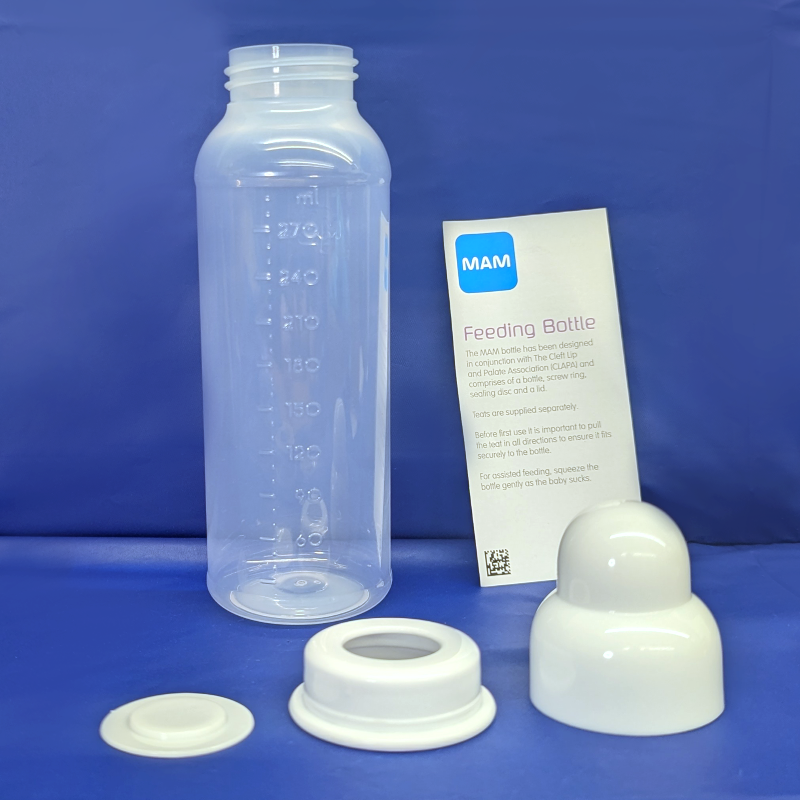 MAM Soft Bottle
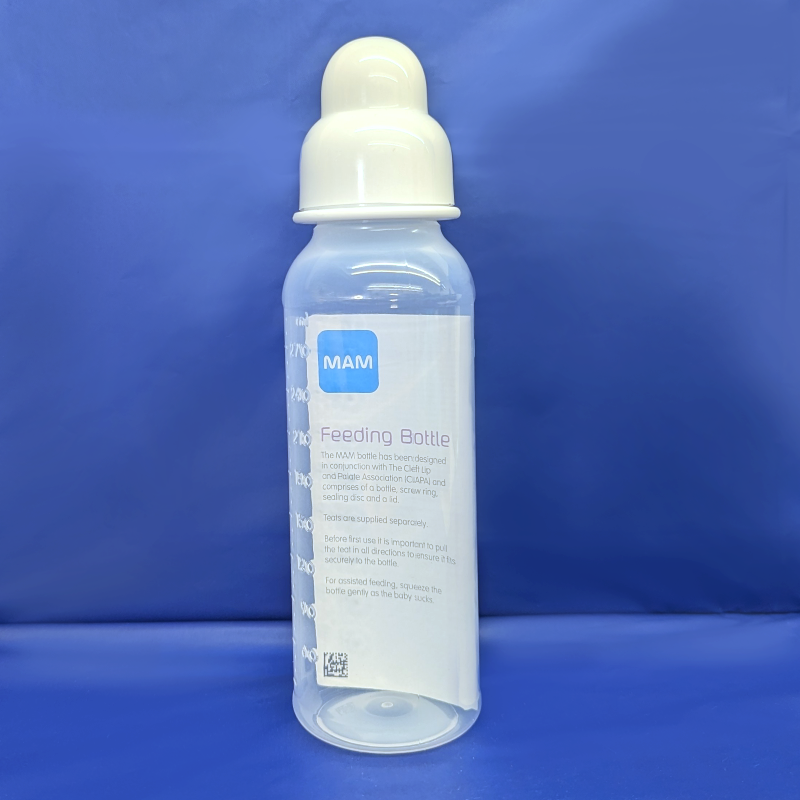 MAM Soft Bottle (assembled)
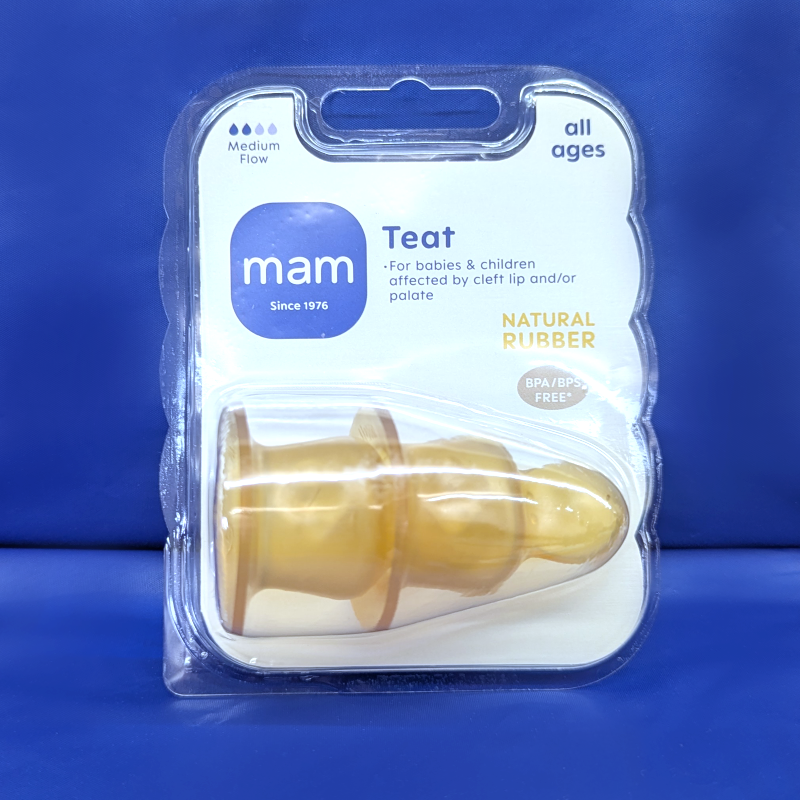 MAM Orthodontic Teats (Vented all ages)
MAM Soft Bottles
MAM Soft Bottles were created in collaboration with CLAPA and Cleft Nurse Specialists almost 20 years ago. They are made of soft plastic and can be gently squeezed to help milk flow out of the teat even if a baby cannot suck.
You should talk to a Cleft Nurse Specialist or other feeding professional experienced in using this bottle before using it yourself. It’s important to learn to squeeze the bottle in time with your baby’s natural sucking reflex, as otherwise your baby could choke on the milk. Your Cleft Nurse will show you how to do this.
MAM Soft Bottles have a standard-sized neck which can be used with most teats, but were created with the MAM Orthodontic Teats in mind.
MAM Orthodontic Teats
MAM Orthodontic teats have a special shape which can help to fill the gap left by a cleft lip and help a baby to create a ‘vacuum’ with their mouth. They are also suitable for babies with an isolated cleft palate.
These teats come in three varieties: ‘Vented Newborn’, ‘Vented all ages’, and ‘Non-vented all ages’.
CLAPA supplies three kinds of MAM orthodontic teats:
- Vented Newborn
- Vented All Ages
- Non-Vented All Ages
Your Cleft Nurse will tell you which kind of teats your baby needs. Talk to them before trying a new kind of teat.
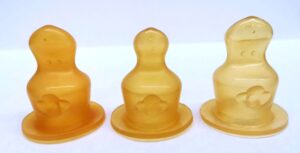
Vented or Non-Vented
All MAM orthodontic teats have a small ‘dimple’ in the side of each teat.
If this dimple has a slit in it (see the two teats on the left of the image above), this means the teat is ‘vented’. This vent helps extra air to escape during feeds.
Make sure you keep this vent on the top of the teat while feeding, as otherwise milk may leak out.
Newborn or All Ages
Vented teats come in two sizes: ‘newborn’ or ‘all ages’. ‘Newborn’ teats are smaller than the ‘all ages’ size. The teat in the middle of the above image is ‘newborn’; the other two are ‘all ages’.
This isn’t necessarily to do with your baby’s age, and plenty of newborns use ‘all ages’ teats. Your Cleft Nurse will tell you which size to ask for.
The bottles are sent to parents and carers fully assembled with a leaflet about their care inside each bottle. Before first use, you should disassemble and clean the bottle, then place the components in boiling water for five minutes to ensure it is properly sterilised.
MAM bottles are dishwasher safe in the top rack (max. 50°C/122°F) and can be cleaned with all common dishwashing liquids.
After you have cleaned your bottles and teats, sterilise them by:
- Baby bottle sterilising solution
- Steam sterilising to manufacturer’s instructions
- Boiling in water for at least five minutes
Note that sterilising methods which use heat may make your MAM teats ‘degrade’ faster. This is because they are made of a soft natural latex material.
The MAM orthodontic teats supplied by CLAPA are made of a soft natural latex material. They will ‘degrade’ faster than regular teats, and must be replaced every 4-6 weeks.
As they are used, they will naturally swell up, meaning new teats may be visibly smaller than used teats.
The below image shows two MAM All Ages sized teats; the one on the left is new, the one on the right has been used for six weeks.
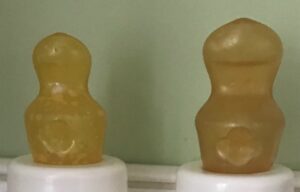
As they swell up, small tears can form in the latex which can make them hard to sterilise properly. Using these teats after the recommended 4-6 weeks can be dangerous for your baby.
Your baby may also start to get used to the larger size of the used teat and find it difficult to go back to the smaller size of the new teats.
Direct sunlight or edible fats make latex age and become porous more quickly. If a teat becomes sticky, it’s a sign that it should be replaced with a new one.
Dr. Brown’s Specialty Feeding System
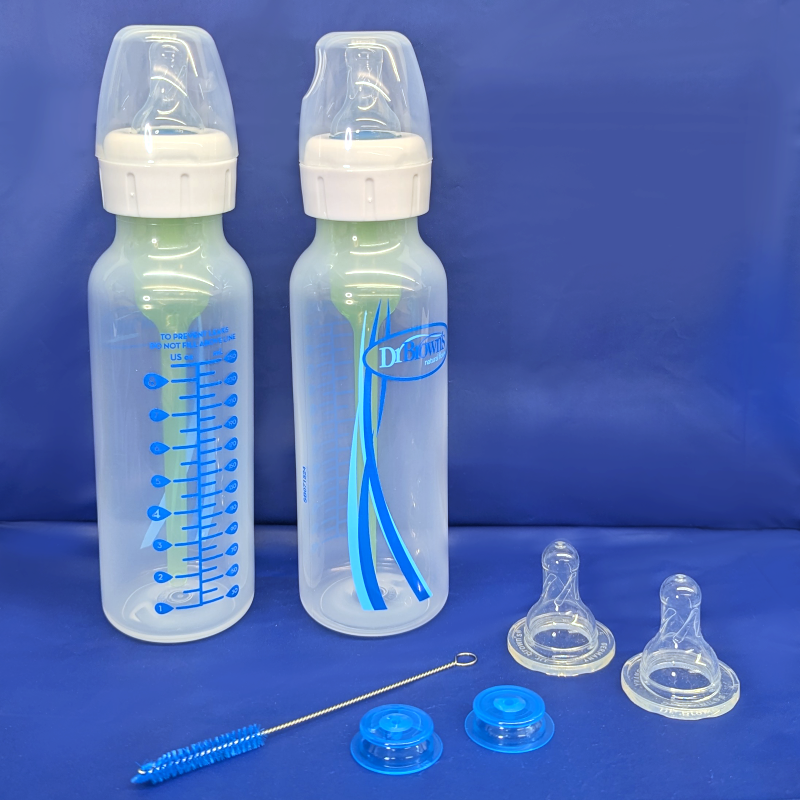 Dr Browns Large Bottle Pack
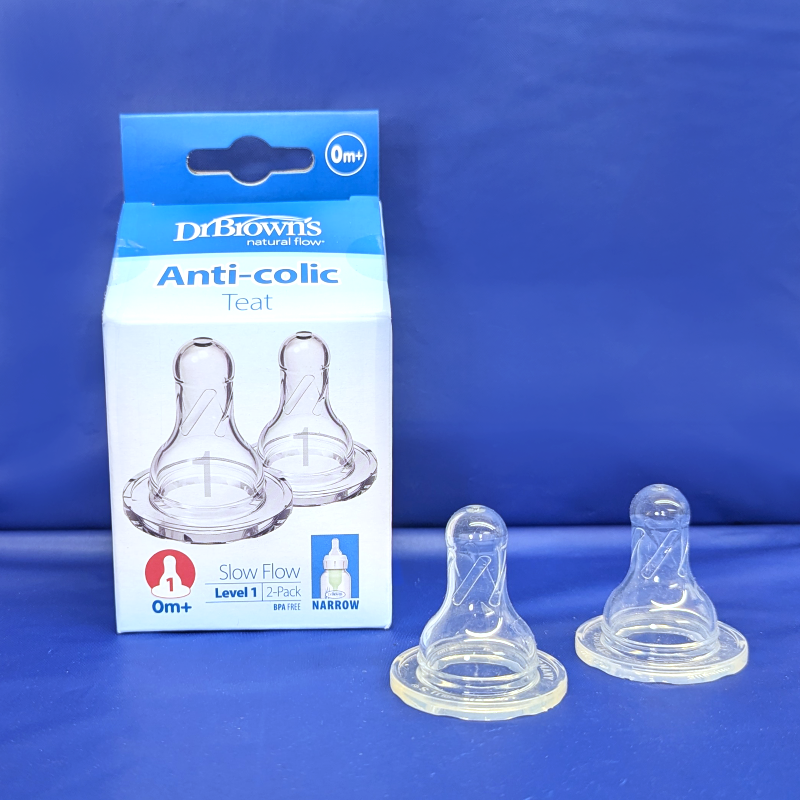 Dr Browns Teats (Level 1 pictured)
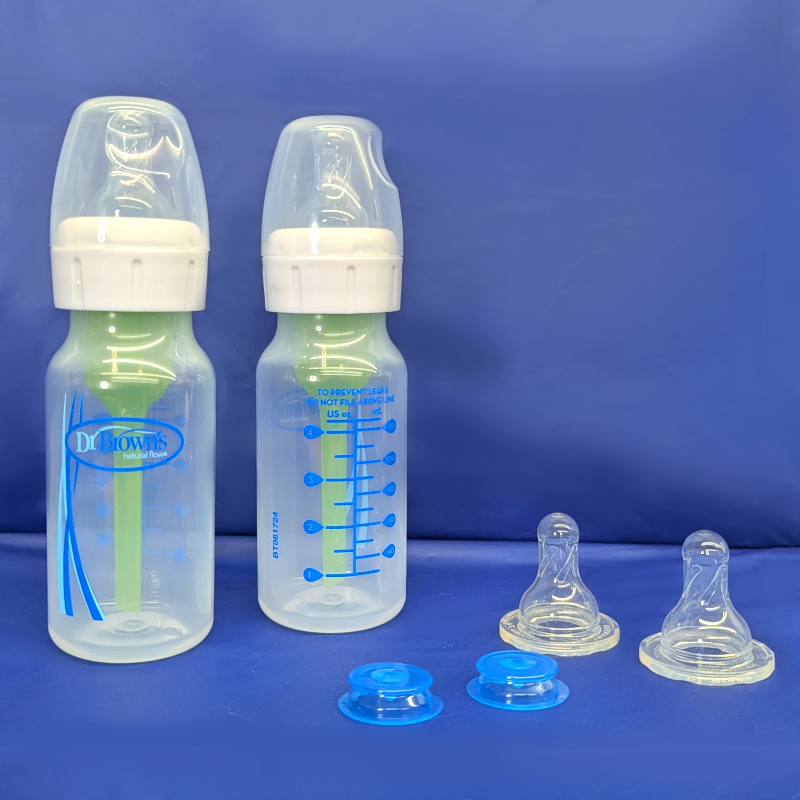 Dr Browns Small Bottle Pack
The Dr. Brown’s Specialty Feeding System was designed together with health professionals to help babies who have issues with sucking from regular bottles, like babies born with a cleft. Learn more about the specialty feeding system on the Dr Browns website.
The system uses a special valve which releases milk into the teat as babies ‘work at’ the teat with their tongues like they would when breastfeeding or using a regular bottle, but they don’t have to suck to get the milk to flow.
With this system, the baby is ‘feeding themselves’ as they control the flow of milk, so it teaches babies to self-regulate.
This system doesn’t work for everyone, however, so please do check with your Cleft Nurse Specialist before ordering.
The infant-paced feeding valve
This special blue valve is what makes these bottles work for babies born with a cleft.
Because of how the Dr Brown’s Specialty Feeding System is supplied to CLAPA, we can only sell the pre-packaged large and small bottle packs. We regret that we cannot supply spare valves.
If you want to order the Dr Brown’s Specialty Feeding System from another supplier, make sure they contain the ‘infant-paced feeding valve’. Other Dr Brown’s bottles may look the same (such as the ‘anti-colic’ bottles), but they do not usually contain this special valve.
Caring for your Dr Brown’s Specialty Feeding System
Dr Browns bottles can leak for a variety of reasons. Most of these are because of the design of the special valve which allows them to work for babies born with a cleft. If this valve isn’t properly assembled or something causes the valve seal to break, it will leak.
Common causes include:
- The bottle collar is too tight or too loose.
- Trying to use the bottle without the vent system, including the blue disc.
- Mixing formula in the bottle – the shaking can dislodge the vent system and cause leaking.
- Heating bottles containing milk in the microwave – this can cause milk to rise up into the valve system and create leaks.
- Filling the bottle above the fill line. This is especially easy to do if you’re mixing formula inside the bottles.
- Using bottles which haven’t been dried properly. Make sure you disassemble the entire bottle and vent system when sterilising and allow them to completely air-dry.
The ink on the outside of Dr Browns bottles may peel or fade if:
- Wiped or handled before they have fully cooled down (if using steam or a microwave to sterilise)
- They are roughly scrubbed on the outside
- Excessively sterilised, such as being left in a cold water solution overnight
We’re very sorry that, due to how CLAPA gets our stock, we are not able to supply replacement valves.
We can only buy and sell Dr Browns bottles in the full large and small bottle packs.
You may wish to ask on our Facebook Support Group to see if another family has spare valves they would be willing to send you.
Alternative feeding equipment
Alternative soft bottles
There are a number of alternative soft bottles available on the internet or high street. Brands include Vital and Nuby bottles. However, these are not designed specifically for babies with a cleft, so parents should always consult with their Cleft Nurse Specialist before purchasing or using any of these.
Some parents prefer these to the MAM bottles as they may be softer and easier to squeeze. While this can be a relief to parents struggling to keep squeezing the MAM bottles, it can also be dangerous, as too much milk squeezed into the baby’s mouth can cause them to choke, or ‘aspirate’. This is why it’s vital that parents are properly trained and follow all advice from their Cleft Nurse Specialist.
Haberman Feeder
The Haberman Feeder is a specialised bottle that was designed by a mother of a child that was born with Pierre Robin Sequence. It is designed to help any baby that has a weak sucking reflex.
These should be purchased directly from Athrodax Healthcare.