

Counselling for adults
CLAPA offers a dedicated counselling service for adults born with a cleft.

'Self-advocacy' means speaking up for your own rights, needs, and interests. This page explains how adults with a cleft can advocate for their needs in healthcare appointments, at work, and other situations.
‘Self-advocacy’ means speaking up for your own rights, needs, and interests.
Living with a cleft can sometimes mean finding your way through systems that don’t always understand what that experience is really like. Whether it’s appointments, work, study, relationships, or everyday conversations, speaking up and explaining what you need can feel hard.
CLAPA has worked with self-advocacy charity Vital Projects to put together some information that will help you learn more about what self-advocacy is, simple techniques that you can use and building your confidence to become an effective self-advocate.
Self-advocacy is not about being the loudest voice or questioning every decision. It means ensuring your needs, wishes and priorities are heard, respected and considered. For someone affected by cleft, this might include asking a healthcare professional to explain information more clearly, requesting support at school or work, or setting personal boundaries.
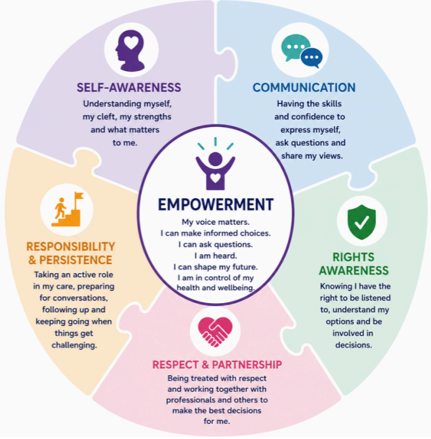
Having the skills and confidence to express myself, ask questions, and share my views.
Knowing I have the right to be listened to, understand my options and be involved in my decisions.
Being treated with respect and working together with professionals and others to make the best decisions for me.
Taking an active role in my care, preparing for conversations, following up and keeping going when things get challenging.
Understanding myself, my cleft, my strengths, and what matters to me.
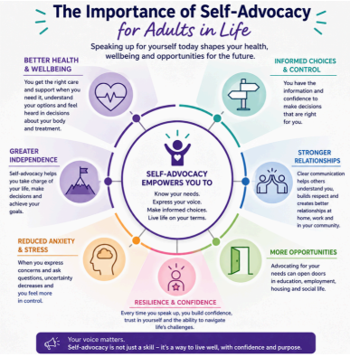
Speaking up for yourself today shapes your health, wellbeing and opportunities for the future.
Self-advocacy empowers you to:
You have the information and confidence to make decisions that are right for you
Clear communication helps others understand you, builds respect and creates better relationships at home, work and in your community.
Advocating for your needs can open doors in education, employment, housing and social life.
Every time you speak up, you build confidence, trust in yourself and the ability to navigate life’s challenges.
When you express your concerns and ask questions, uncertainty decreases and you feel more in control.
Self-advocacy helps you take charge of your life, make decisions and achieve your goals.
You get the right care and support when you need it, understand your options and feel heard in decisions about your body and treatment.
Navigating the System: Self-advocacy workshop (50 mins)
Appointments can often feel rushed, particularly if there is a lot to discuss. Spending a few minutes preparing beforehand can help you feel more confident and ensure your concerns are addressed.
Before your appointment think about:
There is no such thing as a silly question. Healthcare professionals expect people to ask questions and want patients to feel involved in decisions.
Many adults find it helpful to keep all information about their cleft journey together. This might include clinic letters, treatment plans, surgical information, speech or hearing reports, dental information and questions for future appointments.
Having information organised can help you feel more prepared and makes it easier to refer to previous discussions.
If something is unclear, ask. You might find these phrases helpful:
If you are unsure about anything, contact your cleft team. It is perfectly acceptable to
ask for clarification after an appointment.
Sometimes people leave appointments feeling uncertain, overwhelmed, or worried that they forgot to ask something. This is completely understandable. You do not have to have every answer immediately. Good healthcare is built on ongoing conversations – not just one appointment.
Being an effective self-advocate means building positive relationships with the professionals involved in your care while ensuring your own voice remains at the centre of every decision.
Remember, you are the expert in your own lived experience. Healthcare professionals bring clinical expertise, but you bring knowledge of your experiences, priorities, and goals. When these work together through shared decision-making, the best outcomes can be achieved.
If something doesn’t feel right, trust your instincts and speak up, your observations are important. Even if your concern turns out not to require further treatment, raising it allows professionals to provide reassurance, advice and support.
Every conversation you have about your cleft is an opportunity to advocate for yourself. Whether you are speaking to a surgeon, speech and language therapist, dentist, employer, GP or family member, clear communication helps others understand your experiences and work with you to find the best solutions.
Self-advocacy does not need to involve confrontation. The most effective self-advocates are often those who communicate calmly, confidently, and respectfully. Effective communication helps build trust, encourages partnership and ensures your views are understood.
Self-advocacy means becoming an active participant in conversations about your health, wellbeing and future. Every opportunity to speak up builds confidence and strengthens your self-advocacy skills.
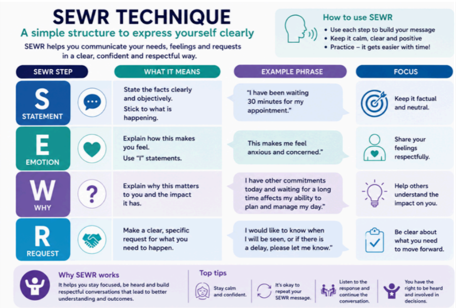
The SEWR helps you communicate your needs, feelings and requests in a clear, confident and respectful way.
How to use SEWR:
| SEWR Step | What it means | Example phrase | Focus |
| S: Statement | State the facts clearly and objectively. Stick to what is happening. | “I have been waiting 30 minutes for my appointment.” | Keep it factual and neutral. |
| E: Emotion | Explain how this makes you feel. Use ‘I’ statements. | “This makes me feel anxious and concerned.” | Share your feelings respectfully. |
| W: Why | Explain why this matters to you and the impact it has. | “I have other commitments today and waiting for a long time affects my ability to plan and manage my day.” | Help others understand the impact on you. |
| R: Request | Make a clear, specific request for what you want to happen. | “I would like to know when I will be seen, or if there is a delay, please let me know.” | Be clear about what you need to move forward. |
Why SEWR works:
It helps you stay focused, be heard and build respectful conversations that lead to better understanding and outcomes.
Top tips:
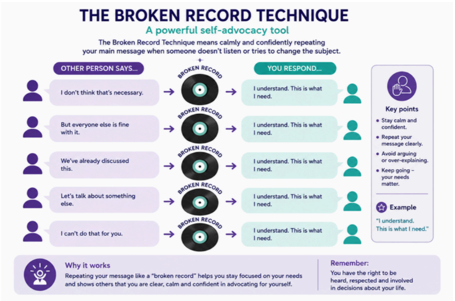
The ‘Broken Record Technique’ means calmly and confidently repeating your main message when someone doesn’t listen or tries to change the subject.
| Other person says | You respond |
| I don’t think that’s necessary | I understand. This is what I need. |
| But everyone else is fine with it | I understand. This is what I need. |
| We’ve already discussed this | I understand. This is what I need. |
| Let’s talk about something else | I understand. This is what I need. |
| I can’t do that for you | I understand. This is what I need. |
Key points:
Why it works
Repeating your message like a ‘broken record’ helps you stay focused on your needs and shows others that you are clear, calm and confident in advocating for yourself.
Remember: you have the right to be heard, respected and involved in decisions about your life.
The Sandwich Technique can be particularly useful when discussing concerns with professionals or schools.
Start with something positive. Raise your concern. Finish by focusing on working together.
For example:
“I appreciate the time the team has taken to explain the treatment options. I’m still concerned that I don’t fully understand how the proposed surgery may affect my speech and recovery. I’d like us to go through this again so I can make an informed decision.”
A workplace example might be:
“I value the support my manager has already provided. I’m finding it difficult to contribute during large online meetings because of the sound quality and people speaking over one another. I’d like us to explore whether any adjustments could make it easier for me to participate.”
This approach recognises positive efforts while making sure your concern and requested outcome are clearly understood.
“I” statements are a simple but effective way of expressing concerns without placing blame. They help others understand how a situation is affecting you while keeping conversations positive, respectful and solution focused.
Examples:
Instead of saying: “You never explain things properly.”
Try saying: “I’d appreciate a little more information so I can understand the treatment plan.”
Instead of saying: “No one is listening to me.”
Try saying: “I’m concerned that my views haven’t been fully understood, and I’d like the opportunity to explain what matters most to me.”
Other useful examples include:
These small changes can encourage open discussion, reduce defensiveness, and help keep the conversation focused on finding a solution.
Speak to your Clinical Nurse Specialist or Cleft Coordinator if you’re already under a cleft team and want to know more about your options or treatment.
You can find your cleft team’s contact details here, or learn more about getting back into cleft treatment.
Your GP is a good place to start if you have any concerns about your health. They can also help you get a referral to your local cleft team.
CLAPA has a wide range of information and support pages aimed at adults born with a cleft. Visit the adults’ hub to learn more.
Learn more about the process of getting back into cleft care as an adult.
This might involve talking to your GP or dentist to discuss a referral. You may also be able to contact your local cleft team directly.
Find your local NHS cleft team here to learn about how you can get a referral as an adult.
See our ‘Emotional wellbeing and mental health‘ page for adults for resources and links to support services and other guidance.
CLAPA’s Peer Support Service can match you with a trained adult volunteer who can use their experiences to support you and help you talk through whatever’s on your mind.
CLAPA’s Counselling Service offers sessions with qualified or student counsellors to help you talk through issues and come up with coping strategies.
You can also contact your GP for mental health support or find a local mental health or counselling service.
These organisations can help you to understand your rights in healthcare, work, and beyond.
See CLAPA’s ‘Support at the workplace‘ page for resources and guidance for adults born with a cleft at work.
You can also contact:
To raise concerns about an NHS service or clinician, contact:
England: Patient Advice and Liaison Service (PALS) or your local NHS complaints advocacy provider.
Wales: Llais
Scotland: Patient Advice and Support Service (PASS)
Northern Ireland: Patient and Client Council (PCC)
You can also search for ‘complaints’ on the hospital or service’s website, or ask a member of staff about the complaints process.
CLAPA offers a dedicated counselling service for adults born with a cleft.

Talk to one of CLAPA’s trained adult volunteers about what’s on your mind.
Find dedicated information and resources for cleft-related issues in the workplace.

Find resources and information to support your emotional wellbeing and mental health.

CLAPA’s Adults’ Support Group on Facebook has over 2.5k members sharing stories and supporting each other.

From online support meet-ups for adults to Q&As and webinars about dedicated topics, you’ll find a CLAPA event to suit you.