Jaw surgery

Jaw surgery (also called ‘orthognathic surgery‘ or sometimes an ‘osteotomy‘) is an operation to change the position of your jaws and how they relate to each other.

Learn more

Jaw surgery (also called ‘orthognathic surgery‘ or sometimes an ‘osteotomy‘) is an operation to change the position of your jaws and how they relate to each other.

This is a major operation which might be offered to you once your face has stopped growing at 16-18 years old.

Play video

Jaw Surgery Q&A with GOSH Cleft Team and patients

Why might I be offered jaw surgery?

Some young people and adults born with a cleft have an upper jaw (maxilla) which is relatively smaller than their lower jaw (mandible). This can make the upper lip and nose look a bit more flat, and make the top teeth sit behind the bottom teeth (an underbite).

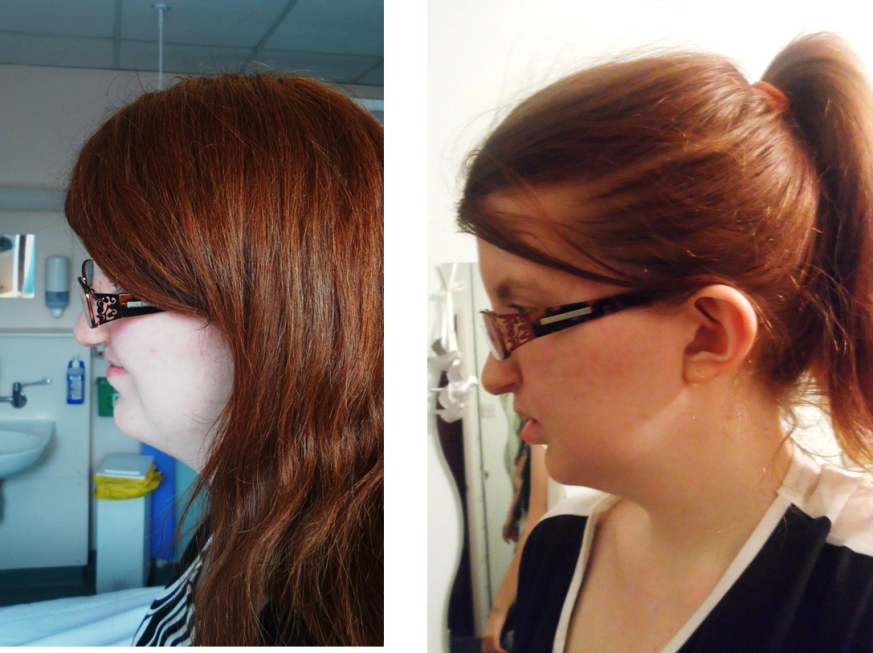
This operation (together with orthodontic treatment like braces) can bring the top teeth and upper jaw forward to line up better with the lower jaw and teeth. This helps with your ‘bite’, which is how your top and bottom teeth fit together. The middle part of the face can be made to come forward and appear less flat. This can change the appearance of the face a lot, especially from the side.

It can also help with issues with chewing and eating, as it will change how your teeth fit together.

This operation is usually only offered once you’ve finished growing, which is around 16-18 years old.

Should I have jaw surgery?

The short answer is that it’s completely up to you.

Your surgeon and Cleft Team will explain why they’re offering you the operation. They should explain the benefits and risks, and answer any questions you might have.

You might want to ask them:

  • Why it’s being offered it now, and what will happen if you choose to delay it
  • How the preparation and recovery might affect your day-to-day life (especially any hobbies or sports)
  • If there are any other options available

It can be helpful to talk to other young adults who have had this operation about their experiences. See Danielle’s story, our Jaw Surgery Q&A video, or Support Services for more information.

You can also ask for an appointment with the]Clinical Psychologist with your Cleft Team to talk about your expectations, hopes and worries around this operation. They can help you to make a decision which is right for you.

Before the operation

The specialists in your Cleft Team will work together to gather all the information they need to plan your operation. This will include taking photographs, special x-rays, models of your teeth, and whatever else is necessary.

The Clinical Psychologist will also usually arrange to meet with you to discuss your hopes and expectations, support you in deciding whether or not to have the operation, and help prepare you throughout the process if needed.

Orthodontic preparation

Braces are put on your teeth to move them into different positions so that when your jaw is moved your teeth will fit together comfortably. This can take months and sometimes even years.

Your teeth may have to move into positions that make them temporarily fit together less well than before so that they will work better after the operation.

How does jaw surgery work?

There are a few different ways this operation is done.

  • Sometimes only the upper or lower jaw needs to be moved.
  • Sometimes the upper jaw is moved forward and the lower jaw is moved backwards so that the teeth meet in a middle position. The two jaws may be moved at the same or different times.

Once they are moved, they will be held in place by tiny metal plates and screws. You might also need a device like a frame attached to the inside or outside of your mouth while you heal, and this may need to be adjusted.

The exact procedure is different depending on your needs and your surgeon, so it’s best to ask them directly if you have any questions about what will happen to you.

The surgery itself is done under general aesthetic when you’re asleep. As it’s all done inside your mouth, you won’t have any visible scars on your skin.

Recovery

After the surgery, you can expect some swelling which may take a while to go down. Your lips will be numb at first, which may make the swelling feel worse than it actually is.

You may have some tubes in your nose or skin to help reduce the swelling and make breathing easier, but these will be removed as soon as possible.

You will be given painkillers if you need them as well as antibiotics to prevent infections.

In some cases, your jaws will be wired shut to hold them in place while the bones heal.

You’ll need to be on a liquid-only diet for some time after the operation, followed by soft foods until your jaws have fully healed.

Treatment after jaw surgery

Once you’ve healed from the operation, you may want or need further treatment such as:

  • Orthodontic Finishing: Once the position of your jaws is stable, your orthodontist can adjust the teeth into a final position to make the top and bottom teeth fit together so they work properly and help to keep the jaws in their new place.
  • Closure of fistulae: A ‘fistula’ is a small hole in the palate which can get bigger after jaw surgery and may need to be closed.
  • Speech surgery: Sometimes jaw surgery can result in a gap between your palate and the back wall of your throat during speech, so your speech may sound more nasal. You’ll usually see a speech and language therapist after the operation so they can assess if your speech has changed.
  • Rhinoplasty: This is an operation to change the appearance of the nose. You may want this depending on how your appearance has changed after jaw surgery.
  • Revisional lip surgery: This is an operation to change the appearance of the lips.

Danielle an hour before the operation (left) and nine days later (right)

Danielle's Story

In the summer of 2013, Danielle had jaw surgery to change the position of her jaws. She wrote a Q&A for CLAPA to share her experiences with other young people to help them understand what to expect.

“Ah don’t you love the summer holidays? Sun, sea, needles, hospitals, anaesthetic…wait what?

“Right, so on 12th July 2013 I had jaw (orthognatic) surgery as my bottom jaw was further forward than my top; creating an underbite which I have been unhappy with since before I can remember.

“I was excited, but extremely apprehensive, for the surgery because it is known to be a pretty big one which causes quite a lot of pain and discomfort.

“Instead of writing reams and reams, I’ve thought of some questions that I would have liked to have asked somebody who had been through it before my surgery and answered them for you guys, so you can all have a read, as it seems to be an operation that lots of people choose to have when they get older.”

I was 17 when I had it, but I think this is the youngest that the hospital team will consider it as they need to wait for your face to completely stop growing – there’d be no point in operating if your face was going to change anyway!

Many people have the surgery well into adulthood, so it really doesn’t matter if you don’t fancy it at 17, there’s always the option to have it later.

Not necessarily! When you get past 16, you’ll find that most operations are up to you completely as it is you that signs the consent form and you that should get to make the ultimate decision.

Some people chose not to, and some just don’t need it! My bottom teeth were much further forward than my top teeth which made me very self-conscious, so I went for it, but it’s not essential.

Don’t read if at all squeamish!

Firstly, the surgeon makes an incision (cut) in a kind of horseshoe shape around your top gums next to your teeth. If you have both jaws moved (they’ll advise you which jaw they’ll move!) then this will happen on the top and bottom.

Then they carefully pull the top jaw forwards so it is in a more comfortable position and screw it in place with some small metal plates.

A few stitches later…you’re done!

I’m no medic, I’m sure there’s much more to it, but that’s all we really need to know 😉

Metal plates…what?!?!?!

As odd as it sounds, you don’t feel it – I promise! If anything, your faces feels a little bit heavier than usual, but you get used to that within a couple of hours. You honestly don’t even feel the metal because they’re too far up.

If you’re like me and don’t have braces, they’ll put some temporary metal screws in your jaws that you can feel but they are taken out pretty painlessly a few weeks after. The plates, on the other hand, stay there forever – but don’t worry, you won’t set off airport alarms, they’re titanium, so aren’t detected!

Of course! Everyone HAS to eat – it’s not comfortable, and you need to find things you feel comfortable eating, but it is possible. You’ll probably find you lose a bit of weight because naturally you won’t be eating as much as you usually do.

For the first two weeks I was on a total liquid diet – so, soup, milkshake, melted ice-cream, rice pudding, blended lasagna (yes, blended lasagna). It’s not the best thing to put up with, but you get used to it pretty quickly.

Within six weeks I could eat almost anything, so it’s not permanent!

Not going to lie, it’s not nice. But, I wouldn’t say it was actually overly painful because the nurses and doctors keep you up to date with painkillers and give you some to take home.

It’s not comfortable and you need to be very careful about leaning over (this can create pressure in the front of your face which can be painful) and transitioning between sitting and lying down takes a bit of practice because it can give you a bit of a head-rush, but all in all, it’s not too bad.

The worst bit for me was during the night when I woke up because the pain meds had worn off, that was pretty painful, but within ten minutes of taking the meds I was just too tired to stay awake!

Find Support

Three young CLAPA volunteers smile at the camera

Cleft++ Mentoring: Young people

Cleft++ Mentoring uses a specialist online platform to safely connect 10-17-year-olds born with a cleft to a trained mentor. These mentors are young adults born with a cleft and they will draw on their experiences to offer personalised support.

Peer Support Service (18+)

If you’re over 18, ask to be matched up with one of our volunteer Peer Supporters who can share their experiences of jaw surgery.